Mauve: warm earth tones as an alternative to cool minimalism

Contemporary interiors are increasingly moving away from sterile, cool schemes toward a warmer, more welcoming aesthetic.
Mauve responds to this shift as a calm, deep shade that works well across furniture, door, and wall panel collections. See how earth tones from the Prime Collection can support the design of cohesive, modern products.

Biophilic Design: the role of calm earth tones in interiors

Growing interest in earth tones does not look like a temporary trend. It’s a response to the need for warmer, calmer, and more welcoming interiors. This direction is reflected in PANTONE 17-1230 Mocha Mousse, Pantone Color of the Year 2025 – a warm, muted brown with a soft coffee-and-cocoa character, close to the mood of Mauve.

This direction is supported by Biophilic Design – design inspired by a closer connection to nature – and by the growing importance of spatial psychology. In a world shaped by technology and sensory overload, users increasingly expect interiors to help them unwind. Muted reds such as Mauve, along with sunbaked rusts and oranges such as terracotta, work as grounding colors – shades that create a sense of stability. They warm up a space, organize the composition, and fit well with a 1970s-inspired aesthetic built around muted colors and soft, rounded forms.

Mauve on large surfaces: a color that creates cohesion

Introducing earth tones requires a thoughtful approach to contrast, color temperature, and pattern scale. Mauve works well on flat furniture surfaces as well as on doors and wall applications. It gives forms a stronger character without overwhelming the space. It pairs naturally with cooler greens, like Pine Green, and natural oaks, such as Lindberg Oak or Karlstad Oak. This makes it a versatile choice for building cohesive combinations within a collection.

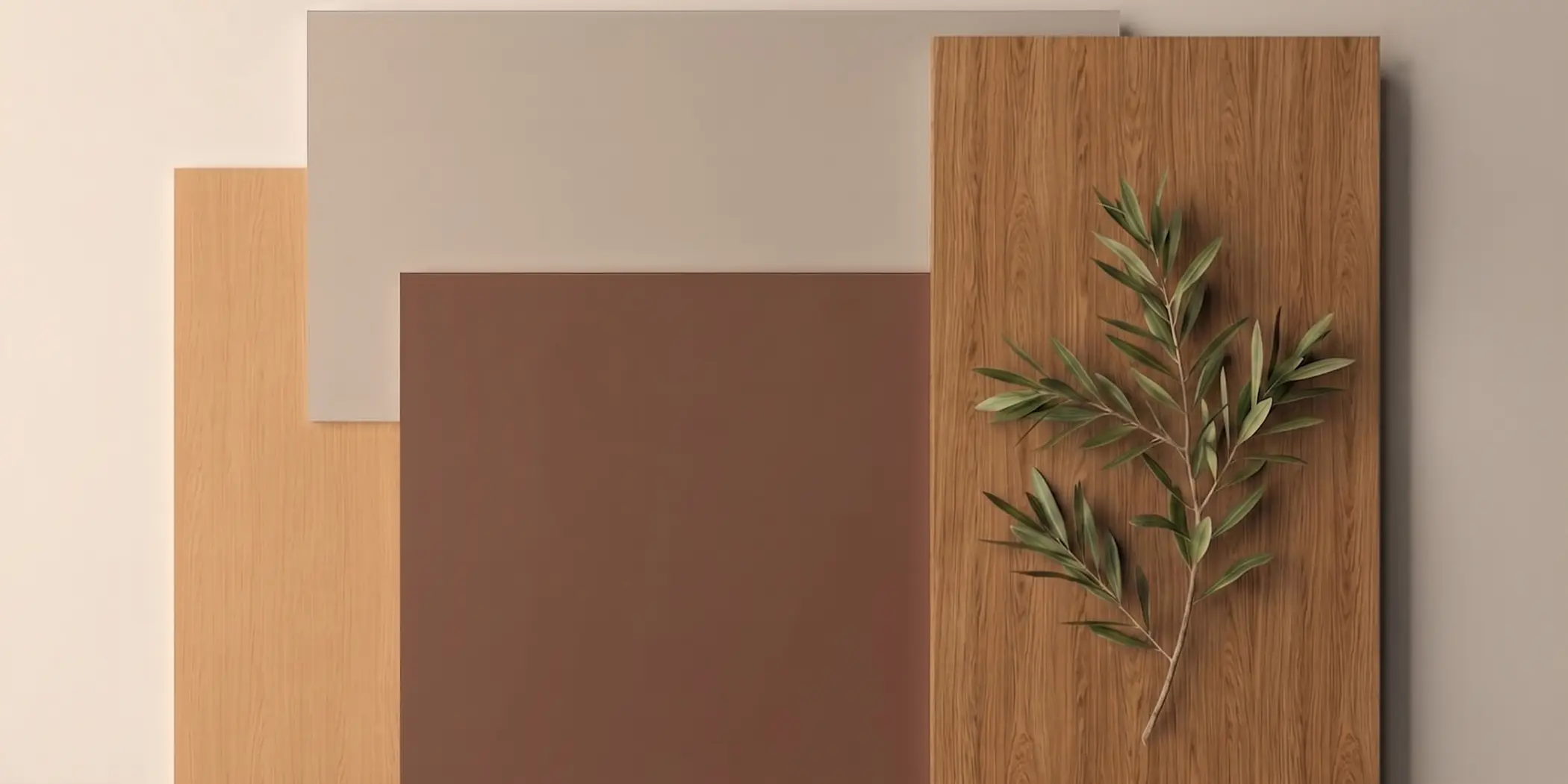
Natural combinations: wood, green, and a warm color base

In collections built around earth tones, it is important to balance color, structure, and material temperature. Mauve can act as a calm base that warms up the composition without competing with the wood grain.

Paired with natural oaks and muted green, it helps create interiors with a softer, more welcoming character. This direction works especially well in projects where cohesion, comfort, and modern simplicity are key.
Earth tones in transitional areas and commercial spaces

The right combination of earth tones helps build a sense of hospitality and understated elegance in both residential and commercial projects. Dark, earthy door panels and frames in Mauve set against warmer walnut wall cladding such as Nogal Mediterraneo or Columbia Walnut, and finished with brushed brass details, create a balanced, elegant effect.

Mauve: warm earth tones as an alternative to cool minimalism

Contemporary interiors are increasingly moving away from sterile, cool schemes toward a warmer, more welcoming aesthetic.
Mauve responds to this shift as a calm, deep shade that works well across furniture, door, and wall panel collections. See how earth tones from the Prime Collection can support the design of cohesive, modern products.

Warm tones as a new foundation for collection design

Shades like Mauve are increasingly becoming a reference point in design. They create a stable, repeatable color base for the furniture and door industries.

Today’s customers are looking for more authenticity, comfort, and a closer connection to nature in interiors. The shift toward warmer palettes helps organize the composition of a space, builds a sense of coziness, and offers an attractive alternative to the grays that have dominated for years.

Biophilic Design: the role of calm earth tones in interiors

Growing interest in earth tones does not look like a temporary trend. It’s a response to the need for warmer, calmer, and more welcoming interiors. This direction is reflected in PANTONE 17-1230 Mocha Mousse, Pantone Color of the Year 2025 – a warm, muted brown with a soft coffee-and-cocoa character, close to the mood of Mauve.

This direction is supported by Biophilic Design – design inspired by a closer connection to nature – and by the growing importance of spatial psychology. In a world shaped by technology and sensory overload, users increasingly expect interiors to help them unwind. Muted reds such as Mauve, along with sunbaked rusts and oranges such as terracotta, work as grounding colors – shades that create a sense of stability. They warm up a space, organize the composition, and fit well with a 1970s-inspired aesthetic built around muted colors and soft, rounded forms.

Mauve on large surfaces: a color that creates cohesion

Introducing earth tones requires a thoughtful approach to contrast, color temperature, and pattern scale. Mauve works well on flat furniture surfaces as well as on doors and wall applications. It gives forms a stronger character without overwhelming the space. It pairs naturally with cooler greens, like Pine Green, and natural oaks, such as Lindberg Oak or Karlstad Oak. This makes it a versatile choice for building cohesive combinations within a collection.

Arles Oak / Uni Koala Grey / Uni Mauve / Sardes Oak

Combined with warm wood, Mauve adds depth and a soft, modern character to the interior. Neutral grey and the distinct oak grain create a harmonious, multi-layered composition with a natural character.

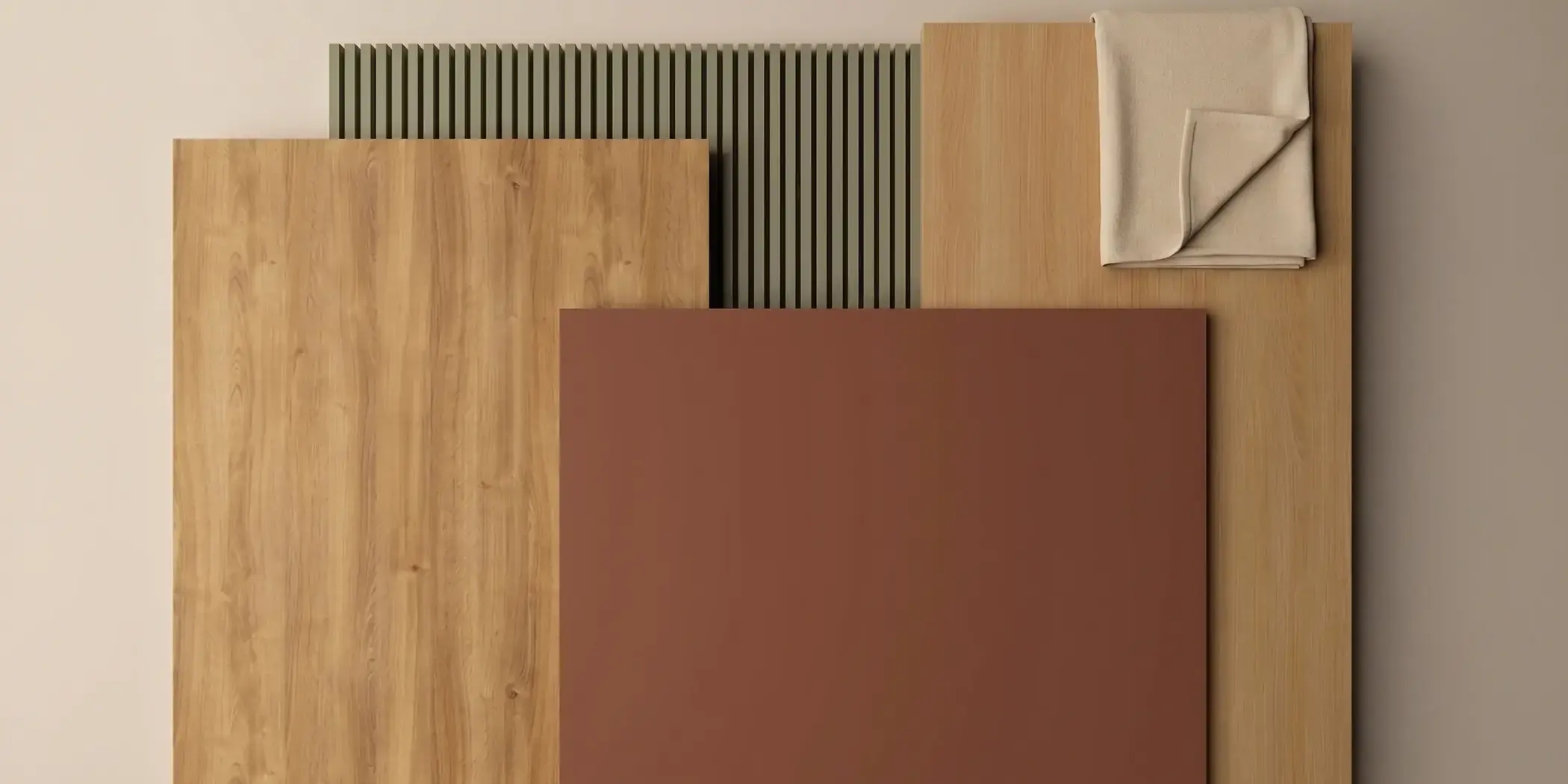
Natural combinations: wood, green, and a warm color base

In collections built around earth tones, it is important to balance color, structure, and material temperature. Mauve can act as a calm base that warms up the composition without competing with the wood grain.

Paired with natural oaks and muted green, it helps create interiors with a softer, more welcoming character. This direction works especially well in projects where cohesion, comfort, and modern simplicity are key.

Karlstad Oak / Uni Pine Green / Uni Mauve / Lindberg Oak

The combination of Mauve with Karlstad Oak, Lindberg Oak, and Uni Pine Green creates a warm, natural composition with a calm, modern character.

Earth tones in transitional areas and commercial spaces

The right combination of earth tones helps build a sense of hospitality and understated elegance in both residential and commercial projects. Dark, earthy door panels and frames in Mauve set against warmer walnut wall cladding such as Nogal Mediterraneo or Columbia Walnut, and finished with brushed brass details, create a balanced, elegant effect.

Catania Oak / Uni Espresso / Uni Mauve / Nogal Mediterraneo

Mauve combined with Catania Oak, Uni Espresso, Nogal Mediterraneo, and gold details creates an elegant, layered composition with a warm character. This combination works well in projects built around comfort, prestige, and quiet luxury.

How Mauve builds product value

Warm earth tones, with Mauve at the forefront, show the shift from cool minimalism toward more welcoming and comfortable interiors. Adding these colors to a collection makes it possible to create calm, modern products that are easy to combine with wood, stone, and metallic details.

How to use Mauve in practice?

  • 1970s vintage aesthetic: pair Mauve with dark walnut,such as Nogal Mediterraneo, and rounded routing on fronts.
  • Enhancing classic white: use Mauve on furniture carcasses or back panels to add depth to the form.
  • Quiet zones, such as bedrooms: use this color on large sliding wardrobe fronts and pair it with creamy white walls.
  • Modern office spaces: replace standard grays with flatdoor panels in Mauve and a concealed frame.
  • Balancing expressive textures: with rustic wood decors, such as Wotan Oak, a smooth Mauve base helps calm the overall composition.