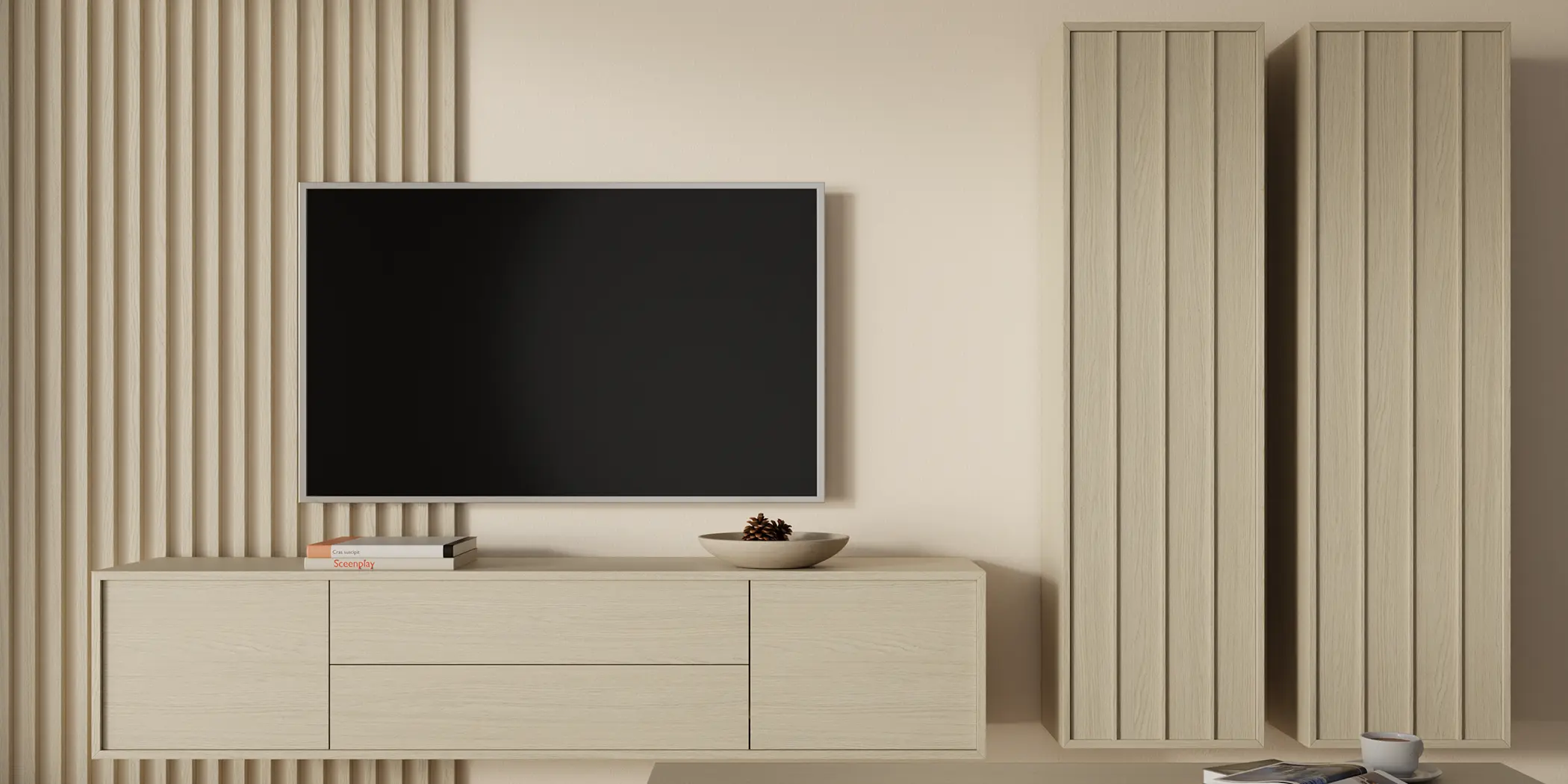
Japandi blends Japanese minimalism with Nordic simplicity. It’s an aesthetic of calm and order: form follows function, and materials and finishes take the lead. In its latest iteration, the style moves away from strict austerity toward details with a tangible texture – while still maintaining balance and restraint.
At the heart of Japandi are two ideas: wabi-sabi (the beauty of imperfection) and hygge (a sense of coziness). Together, they createi nteriors that feel both clear and welcoming. That’s also why matte surfaces, open pores, and soft-touch finishes are chosen more often than glossy, ‘perfect’ surfaces.


Contemporary Japandi is getting warmer. Alongside beige, greige, and cashmere tones, creams and earthy browns appear, while wood tones shift toward honey and walnut notes. Black or graphite act as a counterpoint: not just decoration, but a structuring element that sets rhythm and proportion. Harmony also comes from sage green and sandy shades.
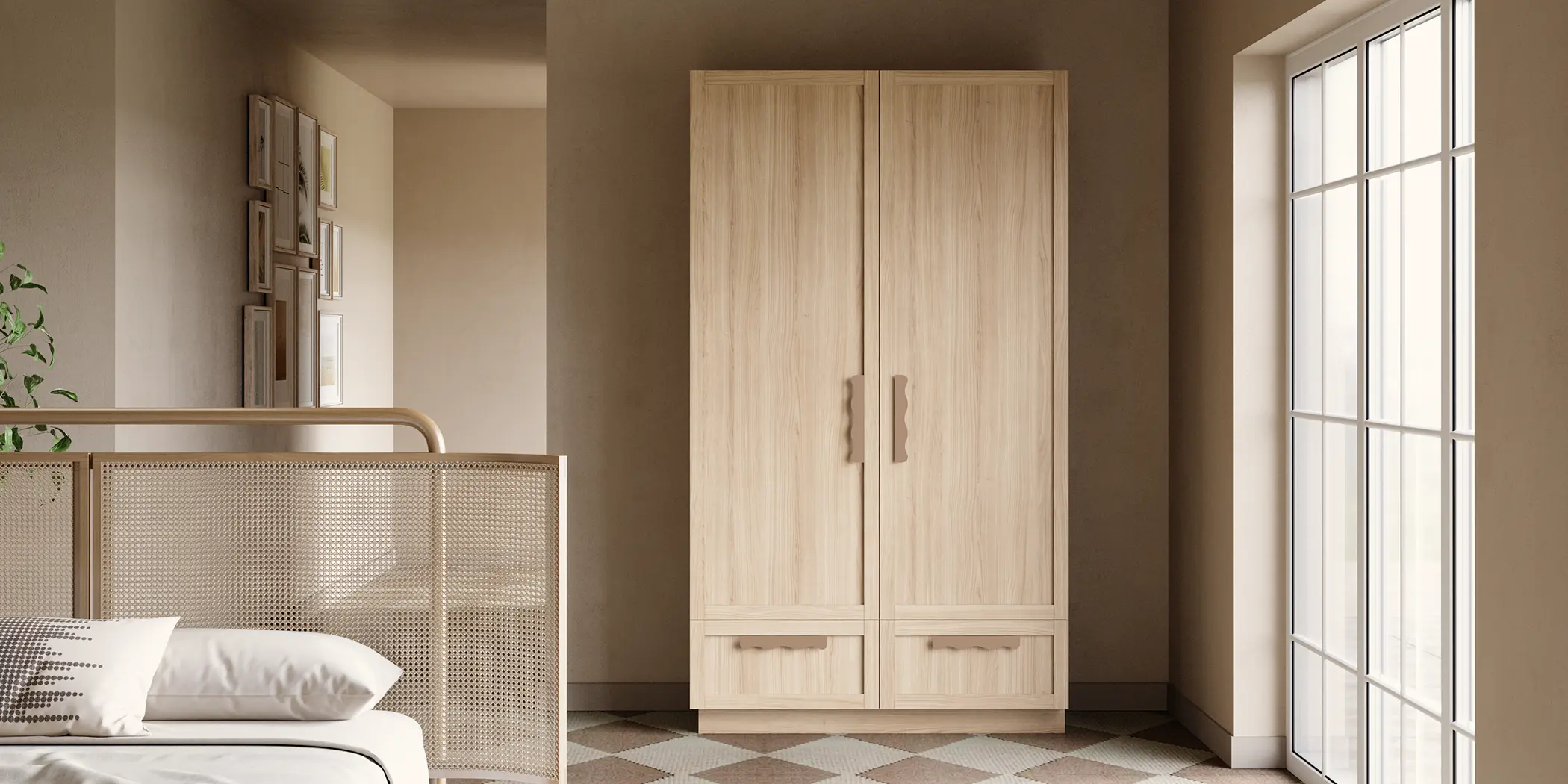
Japandi blends Japanese minimalism with Nordic simplicity. It’s an aesthetic of calm and order: form follows function, and materials and finishes take the lead. In its latest iteration, the style moves away from strict austerity toward details with a tangible texture – while still maintaining balance and restraint.
Japandi is an aesthetic where minimalism doesn’t mean emptiness, but a conscious choice: fewer elements, designed better. It’s built on clean forms, a sense of compositional order, and natural finishes that work beautifully with light. In its current iteration, the style is becoming more sensory: texture, matte surfaces, and warm, muted tones play a bigger role – keeping interiors calm without feeling cold.
At the heart of Japandi are two ideas: wabi-sabi (the beauty of imperfection) and hygge (a sense of coziness). Together, they createi nteriors that feel both clear and welcoming. That’s also why matte surfaces, open pores, and soft-touch finishes are chosen more often than glossy, ‘perfect’ surfaces.

In Japandi, it’s the contrast of textures that builds depth and a sense of warmth— even with a calm, restrained color palette. The style stays ordered, but not harsh: touch and structure replace decoration, becoming a discreet detail you feel more than you see.

Why does Arles Oak fit Japandi?
Arles is an oak decor with a calm, linear grain and a muted grey-beige (greige) tone that creates a bright, soothing Japandi base. It’s versatile: it works equally well on large surfaces (fronts, built-ins) and in small details, keeping the composition tidy.
Contemporary Japandi is getting warmer. Alongside beige, greige, and cashmere tones, creams and earthy browns appear, while wood tones shift toward honey and walnut notes. Black or graphite act as a counterpoint: not just decoration, but a structuring element that sets rhythm and proportion. Harmony also comes from sage green and sandy shades.

Why does Riva fit Japandi?
Riva features a gently defined structure, small knots, and soft sandy-honey tones hat create a calm, friendly Japandi base without excessive contrast. The linear grain brings order, while the Smartfoil 3D texture highlights the sense of touch.
The key is the tactile impression of wood (including pine and species with calm grain patterns), natural stone, textiles with a noticeable structure, and paper. On surfaces, matte and semi-matte finishes matter most – they add depth and softness without relying on extra decoration.
Most common mistakes
The elements of Japandi are calm, function, quality, and texture. It doesn’t shout – it builds everyday comfort. It’s not a passing trend, but a lasting order in both aesthetics and function.