Smartfoil & Smartflex: A Clear Guide to Key Differences and Applications
Choosing the right furniture surface isn’t just about color or pattern. The key is to match the product type to its intended application, meeting users’ expectations for years to come. Different end uses require different solutions. Our two product lines – Smartfoil and Smartflex films – may look similar at first glance, as they both offer attractive decors. In practice, however, real-world performance depends on specific material properties. What’s the difference, and which product should you choose for a given project?
Smartfoil: a versatile, paper-based classic
What is it?
Smartfoil is a high-quality finish foil based on special pre-impregnated paper. The material is printed with a decor and then coated with lacquer to achieve defined optical and technical properties. Available finishes range from deep matte (Smartfoil Mat+) to textured finishes that mimic a natural wood look (Smartfoil Nature/EVO).
Where is it best used?
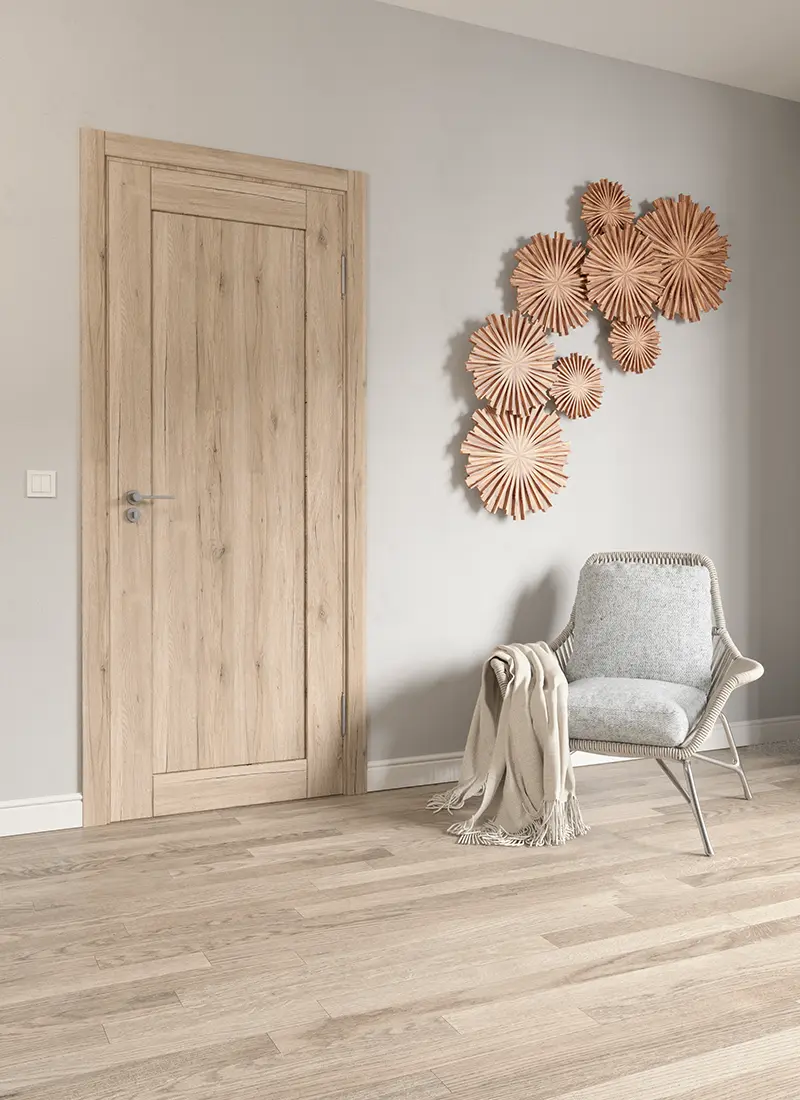
This solution is designed for interior applications. Smartfoil is used in living rooms, bedrooms, and offices. It performs well on furniture surfaces, cabinet components, and finishing elements such as trim and slats. It’s also used on interior doors, wall panels, and frames. If a natural look and pleasant-to-touch surfaces are the priority – both in residential spaces and RV interiors – Smartfoil is the right choice.
- Base: Paper (pre-impregnated)
- Benefits: Wide range of visual and tactile effects, easy processing, UV resistance
- Ideal for: Furniture, interior doors, and trim
-


Smartflex: for demanding applications and moisture resistance
What is it?
Smartflex is a film designed for applications with higher performance requirements. Its base is a polypropylene film (CPP), which makes the material highly flexible. It can be laminated onto flat surfaces and wrapped over complex shapes (2D wrapping). The film is free from formaldehyde and chlorine, and the electron-beam (EB)–cured lacquers deliver excellent surface durability.
Where is it best used?
In areas exposed to moisture and heavier wear. Smartflex is often chosen for interior doors. Thanks to its flexibility, it’s ideal for wrapping profiled trim, where the material must precisely reproduce grooves and bend around edges without cracking.
Key features:
- Base: Thermoplastic film (PP)
- Benefits: Flexibility (2D wrapping), easy to clean
- Ideal for: Interior doors and profiled furniture components
-
-
-
Expert comment – Jonasz Kroll, Implementation Technology Specialist
Paper-based Smartfoil finish foils are a strong option for manufacturers who want efficient production processes while maintaining flexibility in selecting designs forcustomers. Their versatility and wide range of effects make it easy to respond to diverse market needs.
Where requirements are demanding – especially in more specific applications – thermoplastic Smartflex films are an excellent alternative. They allow you to expand the range of applications and position products in a high-performance category where flexibility is the key.